Check a paper Christmas story before your child finds it
Read the notes in order, check the hiding places and make sure each clue leads to something that is actually there.
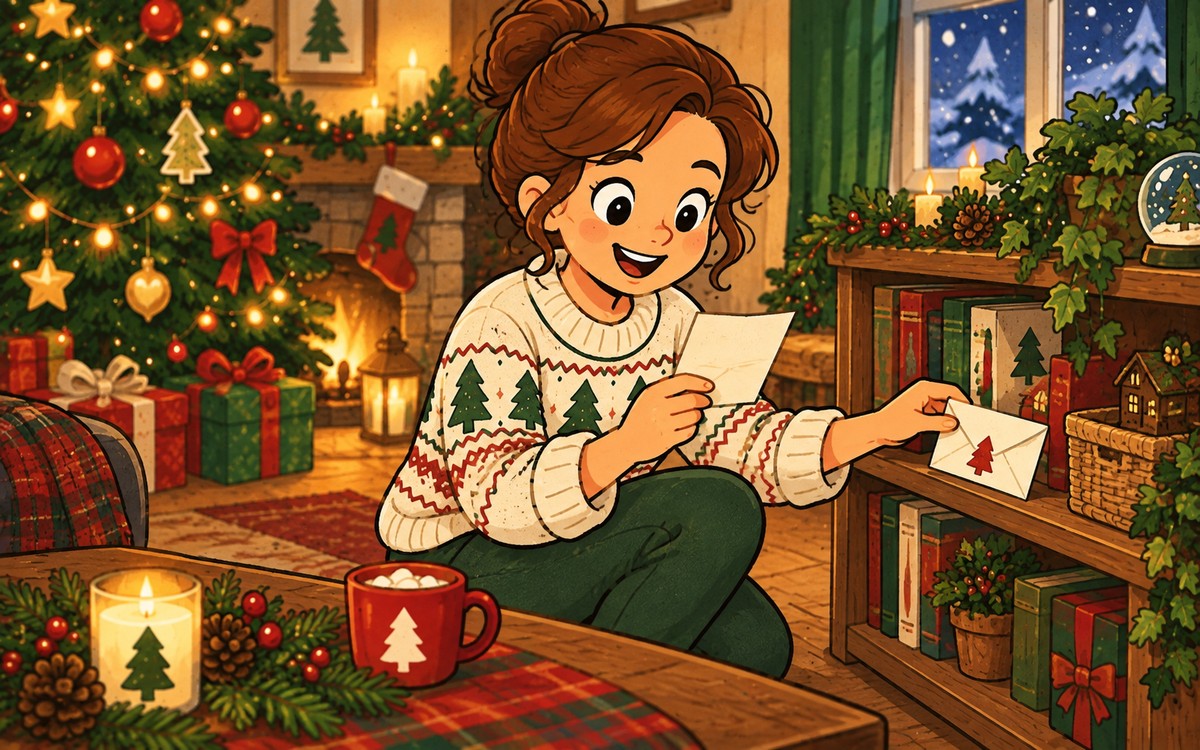
A paper Christmas story can be just two notes and an ending. Before putting it out for your child, walk through it yourself. You are checking that the words lead to reachable places and that the final message fits the real family plan—not preparing a rehearsal record.
Put the notes in the order your child will find them
Read the first note without relying on anything you remember from planning. Does it name the next place clearly? A fictional example is: “Look for an envelope beside your storybooks.” That gives a child a recognizable place. “Go where we talked about earlier” asks them to remember a separate conversation.
Go to that place and read the next note. It could say: “Bring this paper star to the living room. We’ll hang it together after breakfast.” Check that the star is there and that an adult will be ready to help. If the story ends with gifts, write the final note for the gift moment you actually intend to use.
Check the route at your child’s height
Use places the child can reach without climbing or opening an appliance. Keep envelopes away from candles, hot cooking areas and small decorations they might put in their mouth. A low bookshelf, a chair or a familiar cushion is easier to explain than a complicated hiding place.
If a note is difficult to read, read it aloud or add a picture of the destination. For a very young child, one adult can point to the next place and go with them. The pleasure can be finding the envelope; a puzzle is optional.
Make the ending work even if the day changes
Read the last message against the actual schedule. “Come after dinner” works only if dinner is still the next step. If gifts or a visit run late, move the envelope or change the sentence before the child finds it. A plain explanation of the delay is better than more clues that pretend everything is happening on time.
Try the route once after making a change. If it still needs explanation, simplify it: name the place, show the object or use one note instead of several. Keep a spare copy if that would help; there is no need to log checks or assign codes to presents.
The optional paper story sheet has space for the notes and an ending. Ordinary paper is enough. Once each note has a clear next step, put it in place and let the story begin.