Try one Christmas letter before planning a whole story
Write one short letter and read it aloud. Choose whether a letter, a paper route or your existing tradition best fits the day.
You like the idea of a Christmas story, but another activity may be too much for an already busy day. Before planning a whole journey, try one short letter. You will learn more from reading it together than from preparing six envelopes your child may never want to open.
Start with a moment you already share
Choose a natural pause, such as after breakfast or before going to the tree. Ask the other adult involved whether there is time for a few words there. Keep meals, visits and gift opening on their real timetable; the story fits around them.
Write a greeting, one imagined scene and an ending that matches the next real activity. For example, an invented Father Christmas note could say: “I’m passing the snowy forest in our story. Have a good walk together; we’ll read another note when you get back.” Use the Christmas figure your family knows, or write as yourselves.
Read the letter aloud first
Check whether you can say the words comfortably. Replace a long description with one picture your child can imagine. Read the ending especially carefully: does it promise gifts, a call or a visit that is not yet ready? Change it before sharing.
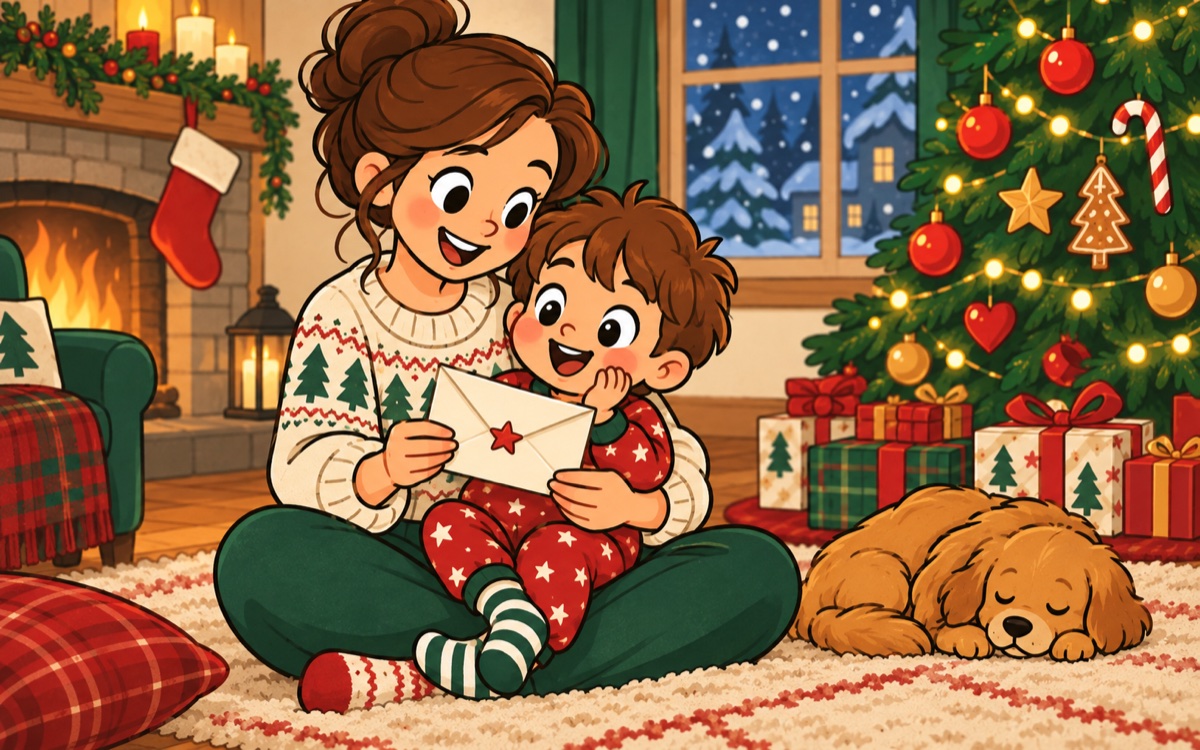
Then read with your child at the moment you chose. They might ask a question, make a drawing or want to return to their game. Follow that response. Enjoying a letter does not mean they will enjoy checking for another one all day.
Add a paper route only if it interests you
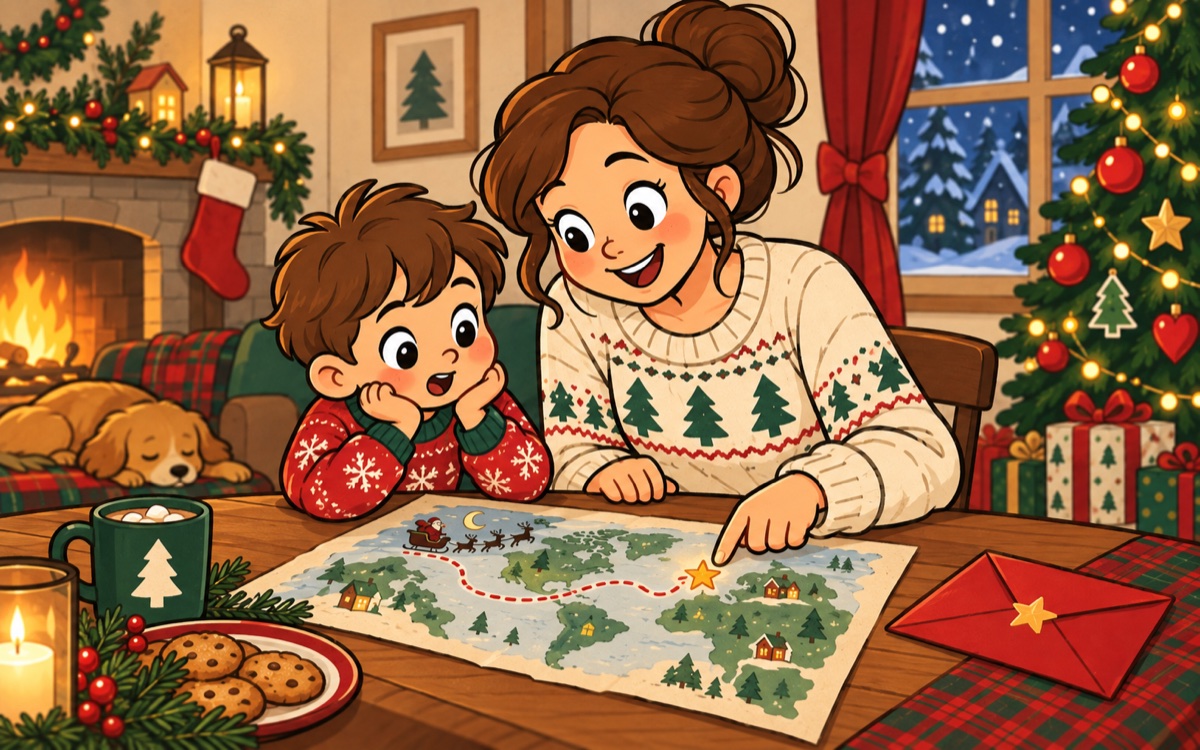
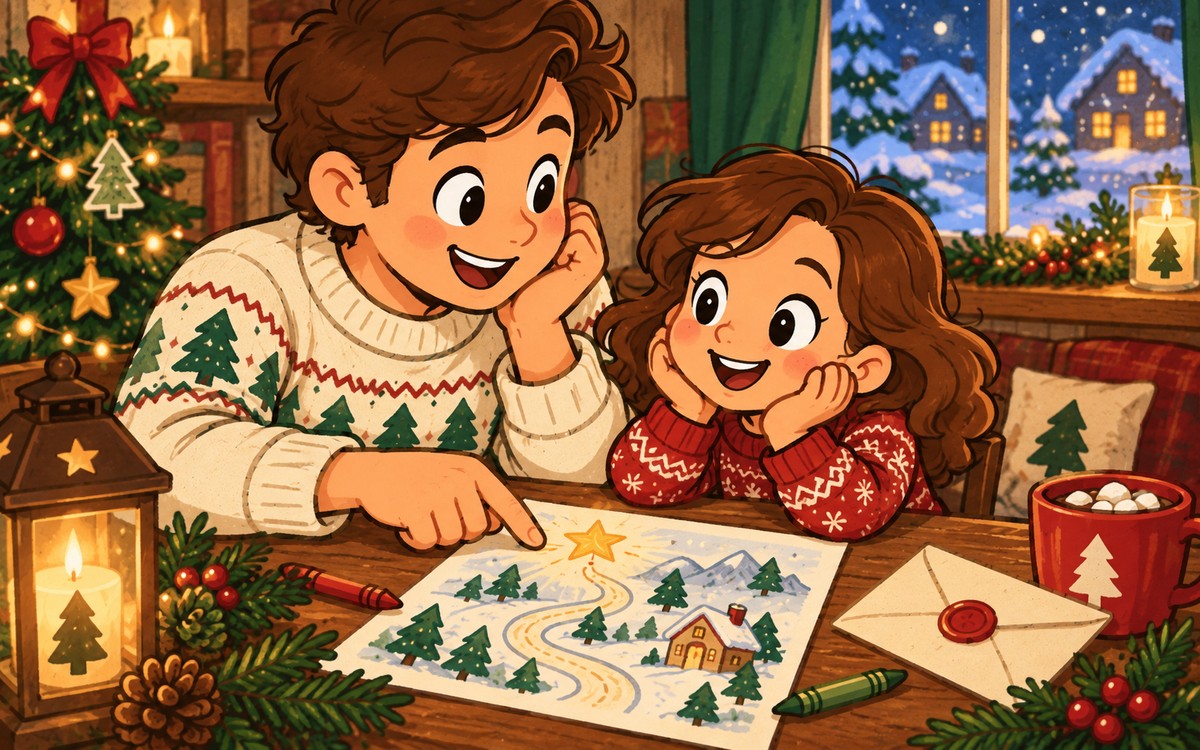
Draw a starting point, one landmark and the destination. Let your child choose a marker and move it when you read. Explain that it is the route in your made-up story. You do not need a detailed map or an exact arrival time.
If the letter itself is enough, keep it that way. If you both enjoy the route, prepare a second letter that recalls one detail from the first. Leave it for another natural pause rather than introducing a new schedule to follow.
Decide what to keep
Afterward, ask what worked for your family. “One letter after breakfast” or “drawing together, without letters” are useful decisions. Note one thing to keep, one to change and one to skip on ordinary paper or the optional family fit card below.
You can also keep your existing tradition. The purpose of the trial is to find a moment you want to share, not to produce a complete Christmas story.